
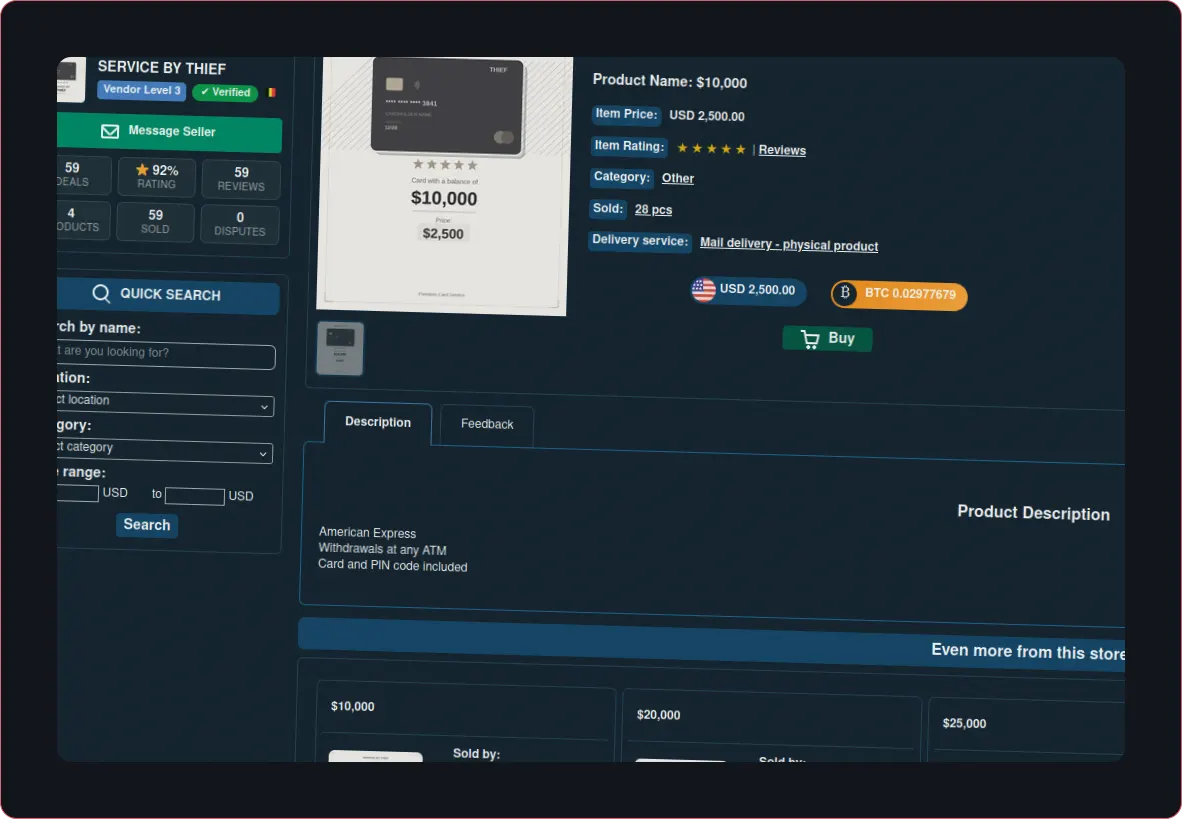
In 2024, a 34-year-old man from Tampa Bay, Florida, known as Mark T., seemed to have uncovered a straightforward approach for making money. He purchased six fake debit cards for a total of $480 using cryptocurrency on a dark web site. He then withdrew $4,200 from three different ATMs. Sadly, his involvement in these illegal actions was short-lived; within 72 hours, he was captured by law enforcement, leading to his arrest. This incident demonstrates how modern ATMs can gather evidence and track illegal activities.
What Is Carding and How Does It Work?
Carding refers to the illicit acquisition and utilization of stolen financial data, which continues to be a widespread tactic in cybercrime. Mark's method for cash withdrawal from cloned cards included several essential stages:
- Information Collection: Offenders gather the magnetic card details through various means, such as skimming devices attached to ATMs, phishing schemes, or purchasing stolen data from dark web marketplaces.
- Card Fabrication: This pilfered information is then transferred onto blank cards, designed to resemble legitimate bank cards, complete with raised names and numbers.
- PIN Acquisition: If the PIN is captured via techniques like hidden cameras or overlay keypads, the individual can easily utilize these cards to withdraw cash.
- Cash Extraction: The perpetrator then approaches an ATM to withdraw money before the actual cardholder realizes the fraudulent activities.
- Funds Concealment: The withdrawn cash is typically converted into cryptocurrency, often through Bitcoin ATMs or peer-to-peer trading platforms, to disguise the transaction trail.
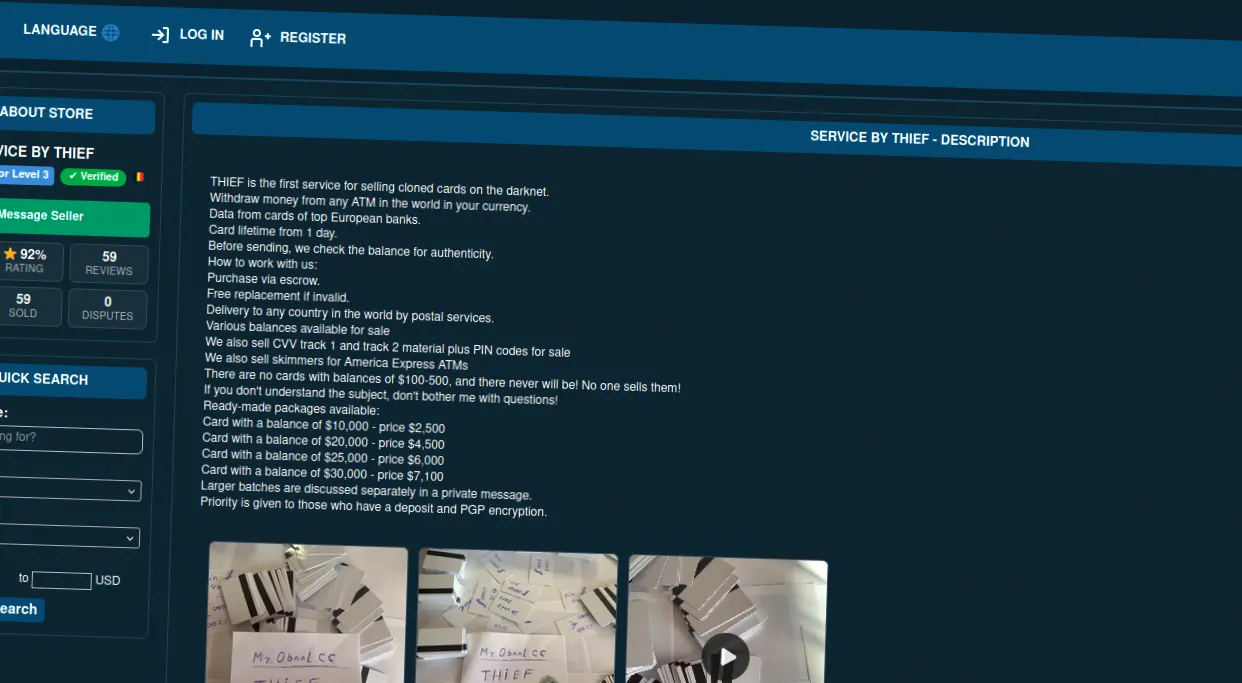
Mark procured his cloned cards from a specific marketplace on the dark web and made transactions using Monero. However, his scheme was short-lived due to a significant oversight: ATMs are equipped with sophisticated surveillance systems that record critical evidence.
How Did Mark Get Caught?
Mark's issues began with his fourth cash withdrawal from an ATM. Today's ATMs come with advanced features that can help track activities effectively:
- Integrated Camera: Many machines include a camera aimed at the user's face, generally recording in 1080p with infrared capabilities for nighttime clarity.
- Secondary Camera: Certain models are equipped with an extra camera that observes the transaction from a different perspective, making it hard to detect from the outside.
- Detailed Transaction Records: Each withdrawal is meticulously logged, which includes the date and time, amount withdrawn, card number, ATM identifier, and transaction outcome.
- Location and Network Data: ATMs are aware of their location and maintain logs of network connections, facilitating the tracking of suspicious activities.
When Mark took out $700 from the ATM, the main camera captured his image clearly, revealing his face without any attempt to disguise it. This footage turned out to be a crucial piece of evidence against him, highlighting the reality that anonymity in the darknet is not applicable in the physical realm.
What Was the Investigation Timeline?
The timeline detailing the inquiry into Mark's actions is as follows:
- On Day 1 (November 2024), unauthorized cash withdrawals were reported, with the involvement of people from Florida, Georgia, and North Carolina. The concerned cards were swiftly blocked by their banks following reports of unauthorized withdrawals from individuals in Florida, Georgia, and North Carolina.
- Day 3: Fraud detection mechanisms at the banks recognize a concerning trend of withdrawals linked to a series of cloned cards functioning across multiple states. This results in an immediate alert.
- The U.S. Secret Service took over the investigation on Day 5, seeking transaction logs and footage from the relevant ATMs.
- A clear image of Mark was captured on Day 8 by surveillance footage from an ATM, and his identity was confirmed by checking the Florida driver's license database. The analysis indicates that a 40-mile radius surrounding Mark's home was where the majority of withdrawals occurred.
- On Day 12, investigators secured a warrant to look into Mark's online activities, which revealed his connections to cryptocurrency and illicit websites on the darknet. This investigation uncovers visits to Tor exit nodes that align with the timing of the unauthorized transactions.
- On Day 14, $3,200 in cash, six blank plastic cards, a magnetic stripe writer, and a laptop containing evidence of visits to darknet marketplaces were found by law enforcement during the execution of a search warrant at Mark's residence.
- Day 15: Mark is apprehended. He acknowledged during questioning that he had purchased the cards and used four for cash withdrawals, while the other two had been disabled by the bank before he attempted to use them.
What Were the Key Findings of the Case?
Crucial information about Mark's illegal activities was uncovered during the investigation.
- We note that there have been 4 withdrawals in total.
- We have noted that the amount withdrawn amounts to $4,900.
- The cards cost $480.
- The arrest occurred 15 days after the initial withdrawal.
- A sentence in federal prison has been imposed for 5 years (60 months).
- A total of $22,000 is constituted by fines and restitution.
- A period of 3 years will be the duration of supervised release.
The financial repercussions of Mark's actions are underscored by these figures, illustrating the rapid response of authorities in such scenarios.
Why Didn't Cryptocurrency Protect Mark?
Mark decided to use Monero to fund the purchase of cloned cards, intending to take advantage of its privacy features. Despite this, he found himself implicated in illegal activities. The investigation uncovered several weaknesses in his strategy:
- Using Centralized Exchanges: Mark obtained Monero from a centralized platform where he completed Know Your Customer (KYC) processes, providing personal information that was later accessed through a court order.
- Timing of Events: The sequence of actions—including purchasing Monero, acquiring the cards, and withdrawing cash from ATMs—occurred within a brief two-week period, creating significant circumstantial evidence against him.
- Physical Evidence: The cloned cards found with him had magnetic strips linked to actual victims, offering direct evidence that cryptocurrency transactions could not hide.
- Video Evidence: Footage of Mark at the ATM served as undeniable proof of his participation, indicating that while some aspects may remain anonymous, clear video footage can lead to identification.
Before participating in similar ventures, we suggest you verify that you:
- Recognize the dangers associated with centralized exchanges.
- Monitor the timing of your transactions.
- Understand the potential for physical evidence linking you to unlawful activities.
What Mistakes Did Mark Make?
Mark’s experience highlights how small mistakes can have serious consequences in illegal activities. We have pinpointed several notable errors he committed:
- Withdrawals that triggered alerts in fraud detection systems were made by Mark, occurring within 40 miles of his home.
- Failure to Conceal Identity: He made no attempts to disguise himself, leading to ATM cameras capturing clear images of his face.
- Using a Centralized Service: By acquiring Monero from a platform that required ID verification, he unintentionally linked his personal information to his transactions.
- Incriminating Evidence at Home: Law enforcement discovered cloned cards and other illegal items at his residence, providing irrefutable evidence of his wrongdoing.
- The amounts withdrawn from the ATMs were further connected to him by the $3,200 discovered in his home.
- Frequent Withdrawals: Over just two weeks, he withdrew a significant sum of money, prompting a rapid response from fraud detection systems.
These mistakes often occur when individuals do not fully understand the complexities of surveillance and fraud prevention.
Security Takeaways for Professionals
Mark's situation highlights the effectiveness of comprehensive security measures in detecting and addressing illicit activities in financial environments. Here are some important takeaways for cybersecurity experts:
- Effectiveness of Fraud Prevention Systems: The fraud detection strategies employed by banks, which utilize pattern recognition and geolocation data, are essential for combating card fraud.
- Combining Physical and Digital Evidence: Merging physical evidence from ATM surveillance with digital transaction records is vital for effective investigations.
- Cryptocurrency Anonymity Limitations: Relying on so-called anonymous cryptocurrencies does not ensure anonymity, particularly with the enforcement of KYC regulations.
- Significance of Educating Customers: Awareness among victims plays a crucial role. Assisting customers in identifying signs of fraudulent activities can greatly lessen financial losses and enhance the speed of response to theft incidents.
What Were the Legal Consequences for Mark?
In March 2025, Mark T. admitted to engaging in fraudulent activities and money laundering related to access devices. A federal court in Florida sentenced him to 60 months in prison, which will be followed by three years of supervised release. Additionally, he is required to pay a total of $22,000 and to make restitution to three individuals who were adversely affected by his actions.
It's crucial to understand that although Mark was not the primary architect of this operation, he still encountered serious consequences due to his involvement. This case underscores the difficulties faced by law enforcement, as the individuals who design these illegal schemes often remain hidden, making it harder to hold them accountable.
The Importance of Awareness in Cybersecurity
Mark's experience underscores the importance of understanding both the digital and physical security aspects of card fraud. His mistakes demonstrate that utilizing cryptocurrencies for anonymity can still lead to identification through other means. Ultimately, criminal activities in the digital realm are no longer shielded by perceived anonymity, especially when the physical world continues to provide critical evidence.
Mark's transactions occurred on a specific darknet marketplace.
Common questions
What is card skimming?
Card skimming is the theft of card information using devices that capture data from a card's magnetic stripe.
How can I tell if an ATM has a skimmer?
Check for unusual attachments on the card reader, and inspect for hidden cameras or keypads nearby.
What should I do if I suspect fraud on my account?
Immediately contact your bank to report the fraud, block your card, and check for any unauthorized transactions.
What are common signs of a cloned card?
Look for discrepancies in charges, unfamiliar transactions, and any issues with using the card at ATMs or merchants.